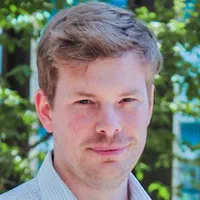
Sebastian Lequime
I am a tenured assistant professor (research focus) in Microbial Ecology and Evolution at the University of Groningen (the Netherlands).
Background
I obtained my Pharm.D. from the University of Tours (France) and my Ph.D. from the University Pierre-et-Marie Curie and Pasteur Institute (Paris, France). I then did a postdoc at the University of Leuven (Belgium), before joining the University of Groningen in 2020.
Awards and Honours
- 2021: Langerhuizen Bate - Hollandsche Maatschappij der Wetenschappen (NL)
- 2021: Beijerinck Premie - KNAW (NL)
- 2017: Prix pour les Jeunes Chercheurs - Fondation Bettencourt-Schueller (FR)
- 2013: Prix de thèse d’exercice - Société de Pathologie Exotique (FR)
Academic publishing and open science
Since May 2022, I am part of the editorial team of the Journal of Evolutionary Biology, the European Society for Evolutionary Biology’s society journal, as Data Editor. There, I assist authors in sharing their data and code, not only to comply with the journal’s requirements but also to allow replication and re-use of published data.
Currently funded project
How do viruses evolve when they are not alone? (2026-2031)
Funded by the Dutch Research Council (NWO) under the Talent Programme Vidi
The rise of viral outbreaks and pandemics underscores the urgent need to understand viral evolution to better prevent and manage viruses’ impact on human and animal health. Most studies overlook that viruses often co-infect hosts alongside other viruses and endogenous viral elements—viral genetic remnants embedded in host genomes. How these factors influence viral evolution remains unclear, despite their potential role in shaping epidemic dynamics and drug resistance. This project investigates the role of co-infections and endogenous viral elements in viral evolution, using an experimental model.
UrbanHealthTwin: A participatory digital twin to investigate the effects of Nature-Based Solutions on climate change-induced urban health challenges (2026-2030)
Funded by the Dutch Research Council (NWO) under the Merian Fund programme (PI: Johan Ninan, TU Delft)
Extreme heat, flooding, and mosquito-borne diseases threaten cities like São Paulo and Rotterdam due to climate change. UrbanHealthTwin develops an advanced digital tool that combines climate data, water dynamics, and community insights to improve urban planning. By integrating real-time local knowledge, it enhances disease risk assessment, early warnings, and nature-based solutions like green spaces for cooling and mosquito control. This research helps cities adapt to climate challenges, ensuring healthier and more resilient urban environments. The findings will guide sustainable policies and benefit other cities worldwide facing similar risks.
Unlocking the Past to Understand the Future of Viral Diseases
Funded by the Gratama Foundation
Past funded project
Can ants be a reservoir of honey bee viruses? (2024)
Funded by the Dutch Research Council (NWO) under the Open Competition XS programme
Insect pollinators, especially honey bees, face significant threats and are currently declining worldwide, putting our agriculture and ecosystems at risk. Among the factors behind this decline, viruses play an important role as deadly pathogens for bees. In this project, I will explore if ants, belonging to the same group of insects as bees, could play a role as reservoirs and spreaders of bee viruses in the Netherlands. Understanding the transmission dynamics of these viruses is critical to set up efficient control measures and prevent their spread to new regions.